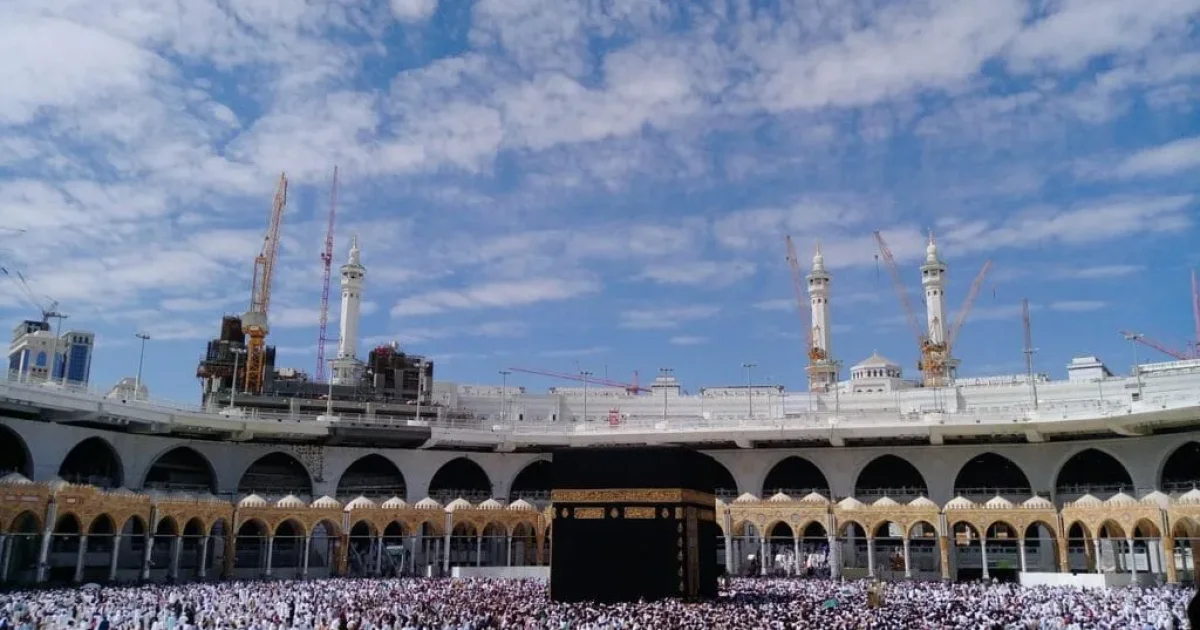
Congratulations After Completing Umrah: What to Say
The photo usually arrives late at night. A cousin standing in front of the Kaaba, still in ihram, grinning at a camera held by a stranger. And you sit there with the message box open, wanting to say something better than the one word everyone else has already sent.
Offering congratulations after completing Umrah is a small thing that people remember for years. It is worth getting the words right, and worth knowing which of them come from the Sunnah and which are simply good custom, because a lot of what gets forwarded around treats the two as the same.
What to say
The phrase most widely used is short enough to say on a doorstep:
تَقَبَّلَ اللَّهُ مِنَّا وَمِنْكُمْ
Taqabbal Allāhu minnā wa minkum — May Allah accept it from us and from you.
A longer wording, common across the Muslim world when greeting someone back from the Haram:
عُمْرَةً مَقْبُولَةً وَذَنْبًا مَغْفُورًا
ʿUmratan maqbūlatan wa dhanban maghfūrā — an accepted Umrah, and forgiven sins.
Both are duas rather than compliments, which is the point. You are not telling someone they did well. You are asking Allah to accept what they did, which is the thing they are quietly worried about on the flight home.
What the Sunnah actually establishes
Here is the honest position, and it is more useful than a confident one.
There is no authenticated narration in which the Prophet صلى الله عليه وسلم prescribed a fixed formula for congratulating someone returning from Umrah. Taqabbal Allāhu minnā wa minkum is reported from the Companions, most often in connection with Eid, and scholars have long considered it a good thing to say on any occasion of worship. The longer wording about an accepted Umrah and forgiven sins appears in later works of fiqh and adab rather than in the primary hadith collections.
That does not make either one wrong. It makes them good duas that Muslims have said to one another for centuries, which is a different category from an established Sunnah, and worth being clear about when someone forwards you a message claiming otherwise.
What is firmly established is broader and, honestly, more generous: making dua for another Muslim, and choosing good words when you speak. Both cover this situation completely. You can look up the relevant narrations on Sunnah.com rather than trusting a graphic on social media.
There is also a well-known practice of asking the returning pilgrim to make dua for you, on the basis that they are coming back from a place and a state where dua is answered. The narration usually cited for this has been graded weak by a number of scholars, so treat it as a hopeful custom rather than a proven instruction. Asking a Muslim to pray for you needs no special evidence anyway.
Saying it to different people
The dua stays the same. What changes is everything around it.
To a parent
Say the dua, then say the specific thing. That you thought about them standing at the Multazam. That you know what it cost them to go. Parents rarely tell their children what the journey meant, and being seen is worth more than a forwarded graphic.
To a close friend
The dua, then ask them something real. What surprised them. Whether Madinah felt the way they expected. Most people come back full of something they cannot quite put down and nobody asks them about it after the first week.
To a colleague or someone you know less well
Taqabbal Allāhu minnā wa minkum, and leave it there. Warm, correct, and it does not ask anything of them. If they want to talk about the trip they will.
If you are writing rather than speaking
Two lines beats twenty. The Arabic with a short transliteration, then one sentence of your own. Long forwarded blocks of text read as forwarded, and people can tell.
When you see them in person
Greet them, embrace them if that is your custom, say the dua. Then read the room. Someone who has just come off a long flight after days of walking in heat is usually running on very little sleep.
If they offer you dates or Zamzam, take a little and make dua before you drink it. If they do not offer, do not go looking. The habit of treating a returning pilgrim as a distribution point for gifts turns a spiritual journey into an obligation to shop, and plenty of pilgrims quietly dread it.
Two things worth not saying
“All your sins are forgiven now.” It is meant kindly, and it overstates what anyone can know. Acceptance is with Allah, and the pilgrim is usually more aware of that than the person congratulating them. Taqabbal Allāhu minnā wa minkum says the hopeful thing without claiming the certain one.
“So how much did it cost?” Common, and it reframes an act of worship as a purchase within about four seconds. If you are asking because you are planning your own trip, ask later and ask properly.
Frequently asked questions
Is there a specific dua for congratulating someone after Umrah?
Not one that is prescribed in an authenticated narration. Taqabbal Allāhu minnā wa minkum is the most widely used and is well grounded as a general supplication. Anything sincere in your own language is also fine.
What is the difference between saying “Umrah Mubarak” and “Taqabbal Allah”?
“Umrah Mubarak” congratulates. “Taqabbal Allah” asks Allah to accept. The second is the more meaningful of the two, and there is no reason not to say both.
Is it too late to say something a week later?
No. A message that arrives after the crowd has moved on often lands better than one of forty on the first day.
Do I say the same thing to someone returning from Hajj?
Yes, with the wording adjusted. The traditional phrase for Hajj asks for an accepted Hajj, an appreciated effort and forgiven sins. Taqabbal Allāhu minnā wa minkum works for both.
Related reading
If your own Umrah is ahead of you, our guides on making the niyyah for Umrah and the difference between Hajj and Umrah are the place to start. For the moment at the well itself, see the dua for Zamzam water.
And if you are travelling to meet family for the homecoming, the Masjid Directory will find you the nearest mosque and its Jumu’ah times wherever you land.
Still have questions?
Sofia can answer follow-up questions on this topic, point you to a mosque near you, or help with anything else on Masjid4All.
Ask Sofia about this