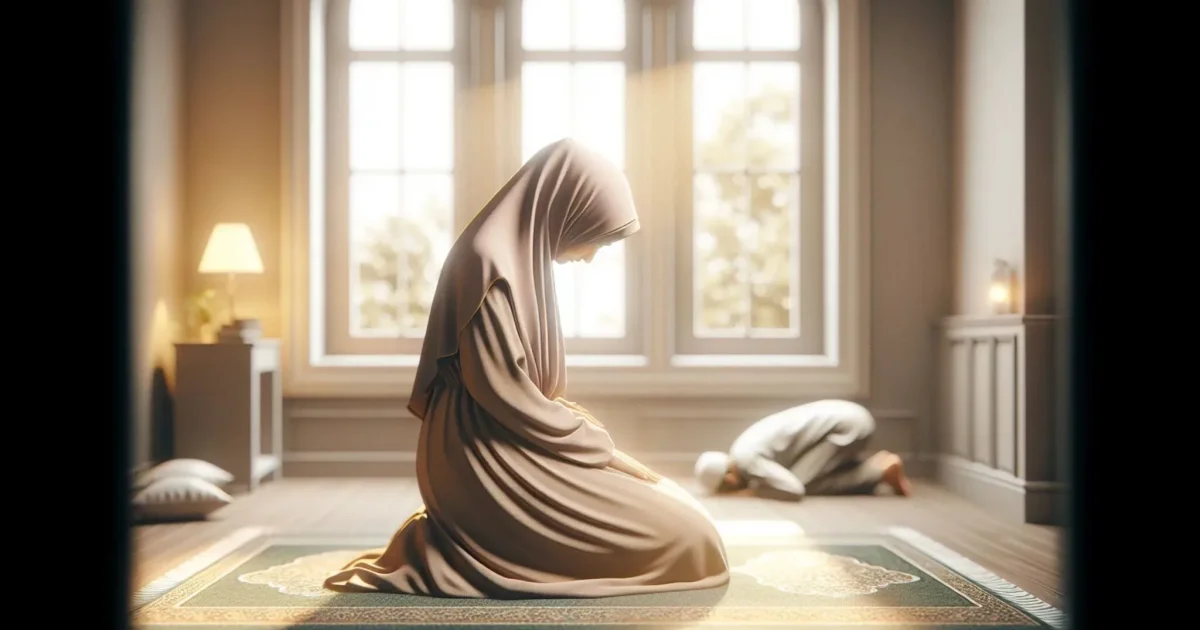
Essential Guidelines for Women’s Prayer in Islam
Essential Guidelines for Women’s Prayer in Islam
Understanding the correct guidelines for women’s prayer is a beautiful and essential part of Islamic practice. This article provides authentic rulings to help every Muslim woman perform salah with confidence and devotion.
Table of Contents
- Importance of Women’s Prayer
- Key Differences in Women’s Prayer
- Practical Guide for Women’s Salah
- Frequently Asked Questions
- Conclusion
The Importance of Women’s Prayer
Prayer is the pillar of faith and the first deed we will be asked about on the Day of Judgment. For women, fulfilling this obligation brings immense spiritual reward and closeness to Allah. The Prophet ﷺ said: “The first matter that the slave will be brought to account for on the Day of Judgment is the prayer. If it is sound, then the rest of his deeds will be sound.” (Sahih al-Jami)
Women’s prayer is unique in certain rulings, designed for modesty and ease. Whether at home or in the masjid, learning these guidelines helps perfect your worship.
Key Differences in Women’s Prayer
Islamic scholars agree that the basic pillars of salah are the same for men and women. However, there are recommended differences in posture and dress to preserve modesty.
Posture and Positioning
When performing women’s prayer, it is recommended that a woman:
- Keep her feet together while standing, unlike men who separate them.
- Place her hands on her chest rather than below the navel.
- Bow (ruku) with her back less horizontal, keeping limbs close.
- Prostrate (sajdah) with her forearms flat on the ground and her stomach touching her thighs.
- Sit in tashahhud with her thighs together, feet pointing to the right.
These practices are based on the hadith that the Prophet ﷺ said: “When a woman prostrates, she should keep her limbs close together.”
Dress Code for Prayer
For women’s prayer to be valid, she must cover her entire body except her face and hands. Loose, non-transparent clothing is required. Allah says: “O children of Adam, take your adornment at every masjid.” (Quran 7:31)
Practical Guide for Women’s Salah
Here is a step-by-step guide to performing women’s prayer correctly:
1. Intention (Niyyah)
Begin with a sincere intention in your heart to pray for Allah’s sake. No verbal declaration is needed.
2. Takbir and Standing
Raise your hands to shoulder level and say “Allahu Akbar.” Place your right hand over your left on your chest.
3. Recitation
Recite Subhanaka, Ta’awwudh, Bismillah, Surah Al-Fatiha, and another surah softly.
4. Ruku (Bowing)
Bow with your back flat, keeping your elbows close. Say “Subhana Rabbiyal Adheem” three times.
5. Sujud (Prostration)
Prostrate with your forehead, nose, hands, knees, and toes touching the ground. Keep your arms close. Say “Subhana Rabbiyal A’la” three times.
6. Tashahhud and Salam
Sit in a modest position and recite the tashahhud. End by turning your head right then left, saying “Assalamu Alaikum wa Rahmatullah.”
For more guidance, you can also check resources at Islamic business ethics to integrate faith into daily life.
Frequently Asked Questions
Can women pray in the masjid?
Yes, women are allowed to pray in the masjid, but it is better for them to pray at home. The Prophet ﷺ said: “Do not prevent the female servants of Allah from going to the masjid.” (Sahih Muslim)
Can a woman lead other women in prayer?
Yes, a woman can lead other women in prayer. She should stand in the middle of the front row, not ahead.
What if a woman misses a prayer due to menstruation?
During menstruation, women are exempt from prayer and do not need to make up missed prayers. This is a mercy from Allah.
Is it necessary to wear socks during prayer?
It is not obligatory, but covering the feet is required according to some scholars. For safety, wearing socks is recommended.
Can a woman pray while holding a baby?
Yes, if necessary. The Prophet ﷺ prayed while carrying his granddaughter Umamah. If the baby cries, you may shorten the prayer.
Conclusion
Learning the guidelines for women’s prayer brings peace and correctness to your worship. Remember that Allah knows your intentions and effort. Start applying these rulings today to perfect your salah. For further study, visit IslamQA for authentic answers.
May Allah accept our prayers and grant us steadfastness. Ameen.
Still have questions?
Sofia can answer follow-up questions on this topic, point you to a mosque near you, or help with anything else on Masjid4All.
Ask Sofia about this