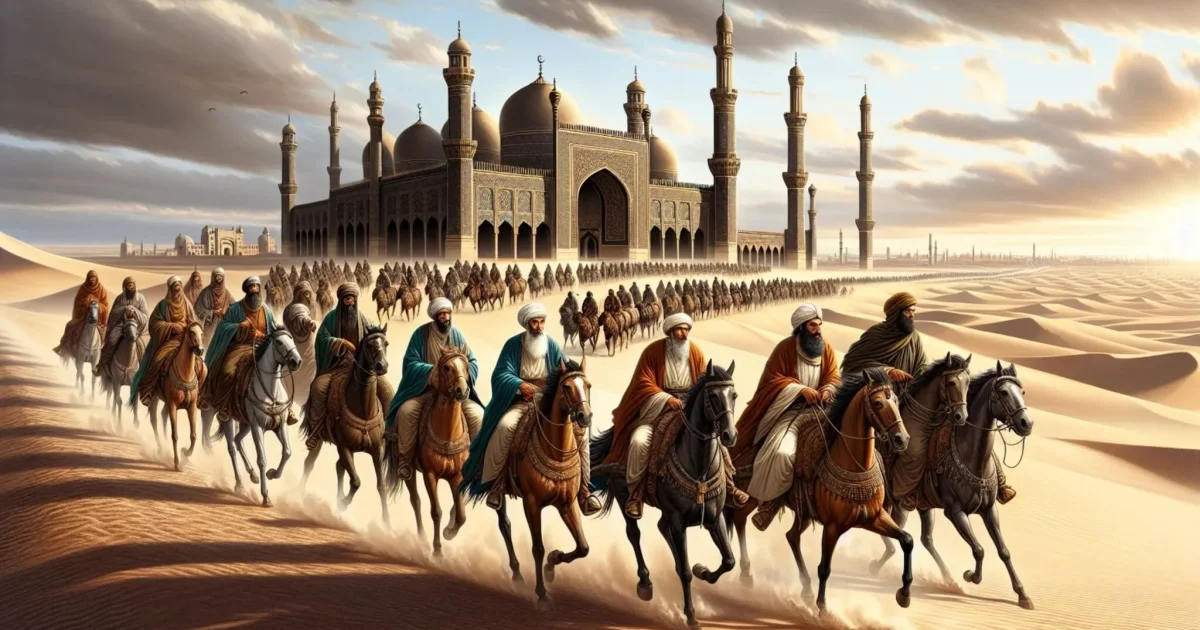
Islamic Conquests: A Powerful Historical Overview
Islamic Conquests: A Powerful Historical Overview
The Islamic conquests represent one of the most transformative periods in world history, marking the rapid expansion of the Muslim world across continents. This historical overview explores the key events, causes, and enduring legacy of these conquests, offering valuable lessons for Muslims today.
Table of Contents
- Introduction
- Causes of the Expansion
- Key Phases of Islamic Conquests
- Impact of the Expansion
- Practical Lessons for Today
- Quran and Hadith References
- Frequently Asked Questions
- Conclusion
Introduction
The Islamic conquests began in the 7th century CE, shortly after the death of Prophet Muhammad ﷺ. Under the leadership of the rightly guided caliphs, the Muslim community expanded from the Arabian Peninsula to vast territories including Persia, Byzantium, North Africa, and beyond. This expansion was not merely military but also cultural, religious, and economic.
Understanding this period helps us appreciate the resilience and unity of early Muslims. For more resources on Islamic history, visit Masjid4All.
Causes of the Expansion
Several factors drove the rapid expansion of the Muslim world:
- Divine mission: Muslims believed in spreading the message of Islam as commanded by Allah.
- Political instability: Neighboring empires like Byzantium and Persia were weakened by wars.
- Economic incentives: Trade routes and fertile lands attracted Muslim armies.
- Unity and leadership: The early caliphs provided strong, cohesive leadership.
Key Phases of Islamic Conquests
Under the Rightly Guided Caliphs (632–661 CE)
After the Prophet’s ﷺ death, Abu Bakr (رضي الله عنه) launched campaigns to unite Arabia. Under Umar (رضي الله عنه), Muslim armies conquered Syria, Egypt, and Persia. The Battle of Yarmouk (636 CE) was a turning point against Byzantium.
The Umayyad Expansion (661–750 CE)
The Umayyad dynasty pushed further into North Africa, Spain, and Central Asia. The conquest of Spain in 711 CE brought Islam to Europe. This era saw the peak of territorial expansion.
Later Dynasties and Legacy
The Abbasids and later empires maintained and enriched the Muslim world. Centers like Baghdad and Cordoba became hubs of learning. For business insights from this era, see Masjid4All Business.
Impact of the Expansion
The expansion of the Muslim world had profound effects:
- Cultural exchange: Spread of Arabic, science, and philosophy.
- Economic networks: Trade flourished across the Silk Road and Indian Ocean.
- Religious diversity: Many people embraced Islam voluntarily due to its message of justice.
Practical Lessons for Today
Modern Muslims can learn from this history:
- Unity and faith are powerful forces for positive change.
- Leadership should be just and consultative.
- Knowledge and trade strengthen communities.
Quran and Hadith References
Allah says in the Quran: “And if Allah had not repelled some people by means of others, monasteries, churches, synagogues, and mosques would have been destroyed.” (Quran 22:40)
The Prophet ﷺ said: “I have been sent with the sword before the Hour, and my provision is placed under the shadow of my spear.” (Sahih Bukhari)
For further guidance, refer to IslamQA.
Frequently Asked Questions
What were the main causes of the Islamic conquests?
The main causes included the divine mission to spread Islam, political instability in neighboring empires, economic incentives, and strong leadership under the caliphs.
Were the Islamic conquests only military?
No, they also involved cultural, religious, and economic exchanges. Many regions embraced Islam peacefully over time.
How did the conquests affect non-Muslims?
Non-Muslims were often granted protection and religious freedom under Islamic rule, paying a tax (jizya) in return.
What is the legacy of the Islamic conquests today?
The conquests laid the foundation for a global Islamic civilization, influencing science, art, and law worldwide.
Conclusion
The Islamic conquests were a pivotal chapter in history, demonstrating the power of faith and unity. By studying this expansion of the Muslim world, we gain insights into building strong, just communities today. May Allah guide us to learn from the past and apply its wisdom.
Still have questions?
Sofia can answer follow-up questions on this topic, point you to a mosque near you, or help with anything else on Masjid4All.
Ask Sofia about this