Prophetic Medicine and Health Practices: Essential Sunnah Habits for Wellness
Prophetic Medicine and Health Practices: Essential Sunnah Habits for Wellness
Prophetic medicine and health practices are timeless gifts from the Messenger of Allah ﷺ. These habits not only heal the body but also nourish the soul. In a world full of stress and illness, turning to the Sunnah offers a complete path to wellness. This article explores key health recommendations from the Prophet ﷺ, backed by authentic Hadith and modern insights.
Table of Contents
- What Is Prophetic Medicine?
- Dietary Habits in the Sunnah
- Natural Remedies Recommended by the Prophet ﷺ
- Prophetic Medicine and Health Practices for Prevention
- Spiritual Health and Healing
- Practical Tips for Implementing Sunnah Health Habits
- Frequently Asked Questions
- Conclusion
What Is Prophetic Medicine?
Prophetic medicine refers to the health advice, remedies, and practices taught by Prophet Muhammad ﷺ. It covers diet, hygiene, natural treatments, and spiritual healing. Unlike modern medicine alone, prophetic medicine and health practices address the whole person—body, mind, and soul. The Quran says, “And We send down of the Quran that which is healing and mercy for the believers” (17:82). This verse highlights the healing power of divine guidance.
The Prophet ﷺ said, “Make use of medical treatment, for Allah has not made a disease without appointing a remedy for it” (Sahih al-Bukhari). This Hadith encourages seeking both natural and prophetic cures.
Dietary Habits in the Sunnah
Eating in Moderation
The Prophet ﷺ taught us to fill our stomach with one-third food, one-third water, and one-third air. Overeating leads to laziness and illness. He said, “The son of Adam does not fill any vessel worse than his stomach” (Sunan Ibn Majah). This simple rule prevents many modern diseases.
Recommended Foods
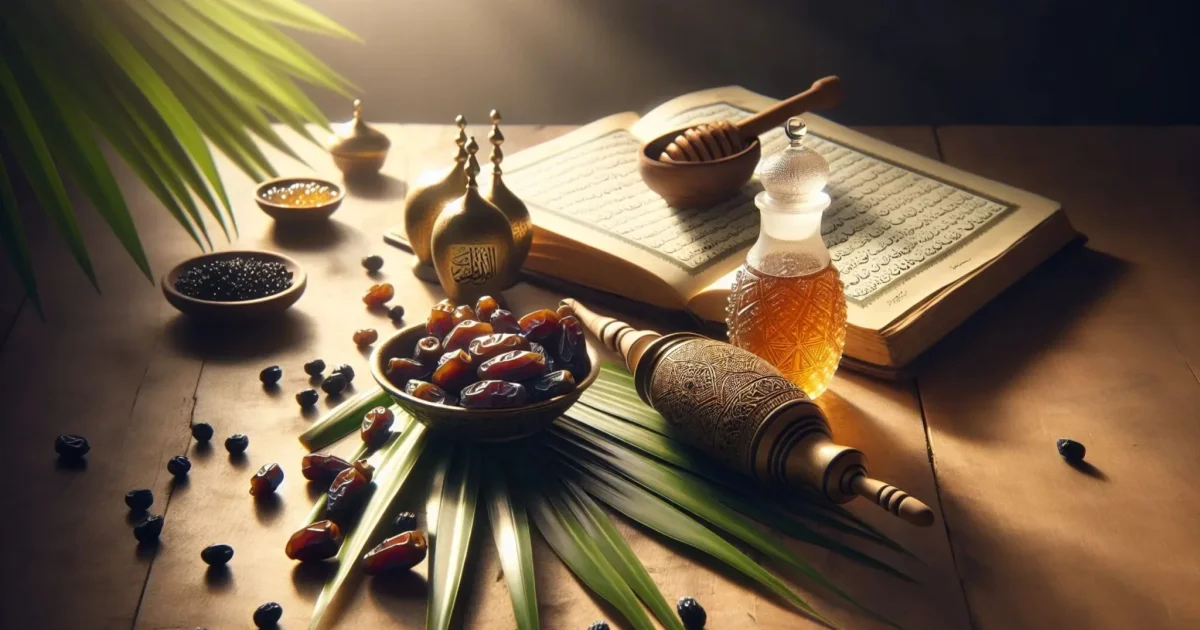
- Dates: The Prophet ﷺ broke his fast with dates. They are rich in energy and nutrients.
- Honey: Called a healing for mankind in the Quran. “There emerges from their bellies a drink of varying colors, in which there is healing for people” (16:69).
- Black Seed (Nigella sativa): The Prophet ﷺ said, “Use this black seed regularly, because it is a cure for every disease except death” (Sahih al-Bukhari).
- Olive Oil: Praised in the Quran and Sunnah for its health benefits.
Mindful Eating
The Prophet ﷺ always ate with his right hand, said Bismillah, and praised Allah after meals. These practices promote gratitude and digestion.
Natural Remedies Recommended by the Prophet ﷺ
Hijama (Cupping Therapy)
Hijama is a powerful detox method. The Prophet ﷺ said, “Indeed, in cupping there is a cure” (Sahih al-Bukhari). It helps with blood circulation, pain relief, and immunity. Many Muslims practice hijama today for overall wellness.
Honey and Ginger
Honey is both food and medicine. The Quran mentions it as a healing drink. Ginger is also recommended for its warming and anti-inflammatory properties. Combining these natural ingredients boosts health.
Talbina (Barley Porridge)
The Prophet ﷺ recommended talbina for grief and physical weakness. It is easy to digest and rich in fiber. Aisha (رضي الله عنها) said, “The Messenger of Allah ﷺ used to prescribe talbina for the one who was sick and for the one who was grieving” (Sahih al-Bukhari).
Prophetic Medicine and Health Practices for Prevention
Prevention is better than cure. The Sunnah offers many preventive measures that align with modern science.
Hygiene and Cleanliness
The Prophet ﷺ emphasized cleanliness as half of faith. Washing hands before and after meals, using miswak for oral hygiene, and performing wudu regularly prevent infections and diseases.
Sleep and Wakefulness
The Prophet ﷺ slept early and woke up before Fajr. He advised sleeping on the right side, which benefits digestion and heart health. Avoiding late nights strengthens the immune system.
Fasting
Fasting on Mondays and Thursdays or the three white days of the lunar month gives the digestive system a rest. Fasting also improves mental clarity and spiritual connection.
Physical Activity
The Prophet ﷺ encouraged walking, riding, and archery. A healthy body supports a strong faith. Regular moderate exercise prevents chronic diseases.
Spiritual Health and Healing
Prophetic medicine and health practices are incomplete without spiritual care. The Quran is the ultimate healing. Reciting Surah Al-Fatiha, Ayat-ul-Kursi, and the last two verses of Surah Al-Baqarah daily protects from harm.
The Prophet ﷺ also taught ruqyah (spiritual healing) for illnesses. He said, “There is no spell better than the Qur’an” (Sahih Muslim). Trust in Allah combined with natural remedies brings complete recovery.
Practical Tips for Implementing Sunnah Health Habits
- Start your day with dates and water: Follow the Sunnah breakfast for energy.
- Use miswak daily: It whitens teeth and freshens breath naturally.
- Practice hijama seasonally: Spring and autumn are ideal for detox.
- Eat less, eat slowly: Stop before feeling full.
- Include honey and black seed in your diet: Add to tea or yogurt.
- Sleep on your right side: It improves heart function and reduces snoring.
- Recite morning and evening adhkar: These protect from physical and spiritual harm.
- Walk daily: Even 15 minutes of walking improves mood and metabolism.
- Visit Masjid4All for local Islamic events and health talks.
- Support Muslim businesses that offer natural and halal health products.
These simple steps can transform your health when practiced consistently. For more authentic guidance, consult IslamQA or trusted scholars.
Frequently Asked Questions
What is prophetic medicine?
Prophetic medicine includes the health advice, remedies, and practices of Prophet Muhammad ﷺ, covering diet, hygiene, natural treatments, and spiritual healing.
Are prophetic medicine and modern medicine compatible?
Yes, they complement each other. Prophetic medicine focuses on prevention and holistic wellness, while modern medicine treats acute conditions. Both can be used together with proper knowledge.
Can honey really cure diseases?
Honey has antibacterial and anti-inflammatory properties. The Quran and Hadith confirm its healing power, and modern science supports its use for wounds, coughs, and infections.
How can I start practicing prophetic medicine today?
Begin with small Sunnah habits: eat dates, use miswak, drink honey water, practice hijama, and recite Quran daily. Consistency is key.
Conclusion
Prophetic medicine and health practices are a mercy from Allah. They offer a balanced approach to life that nurtures the body, mind, and soul. By following the Sunnah, we not only improve our health but also draw closer to our Creator. Start today with one habit and watch your wellness transform. May Allah grant us all health and barakah in our lives. Ameen.
For more resources, visit Masjid4All and Masjid4All Business.
Still have questions?
Sofia can answer follow-up questions on this topic, point you to a mosque near you, or help with anything else on Masjid4All.
Ask Sofia about this