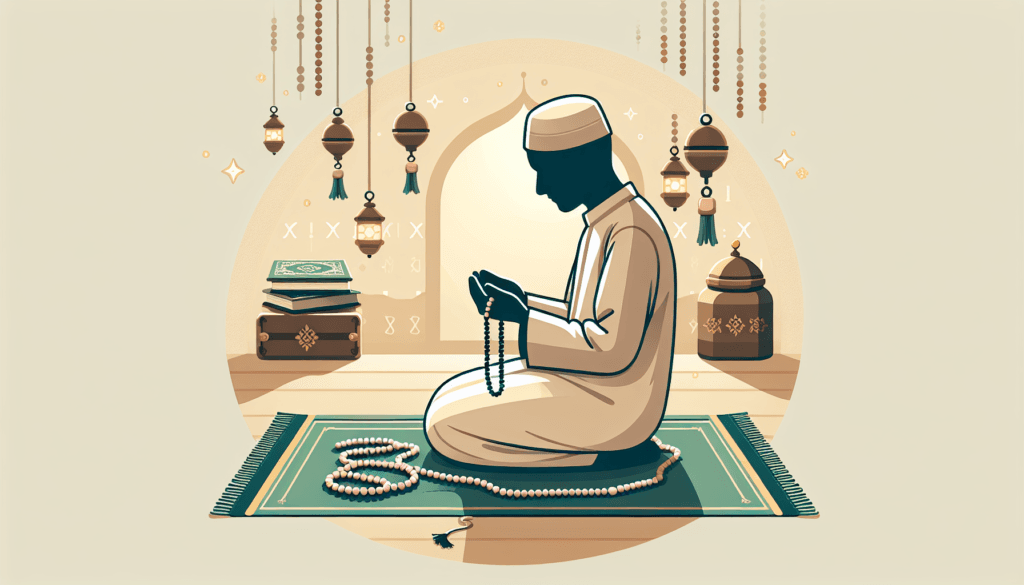
Dua in Islam: Etiquette, Best Times and Authentic Wording
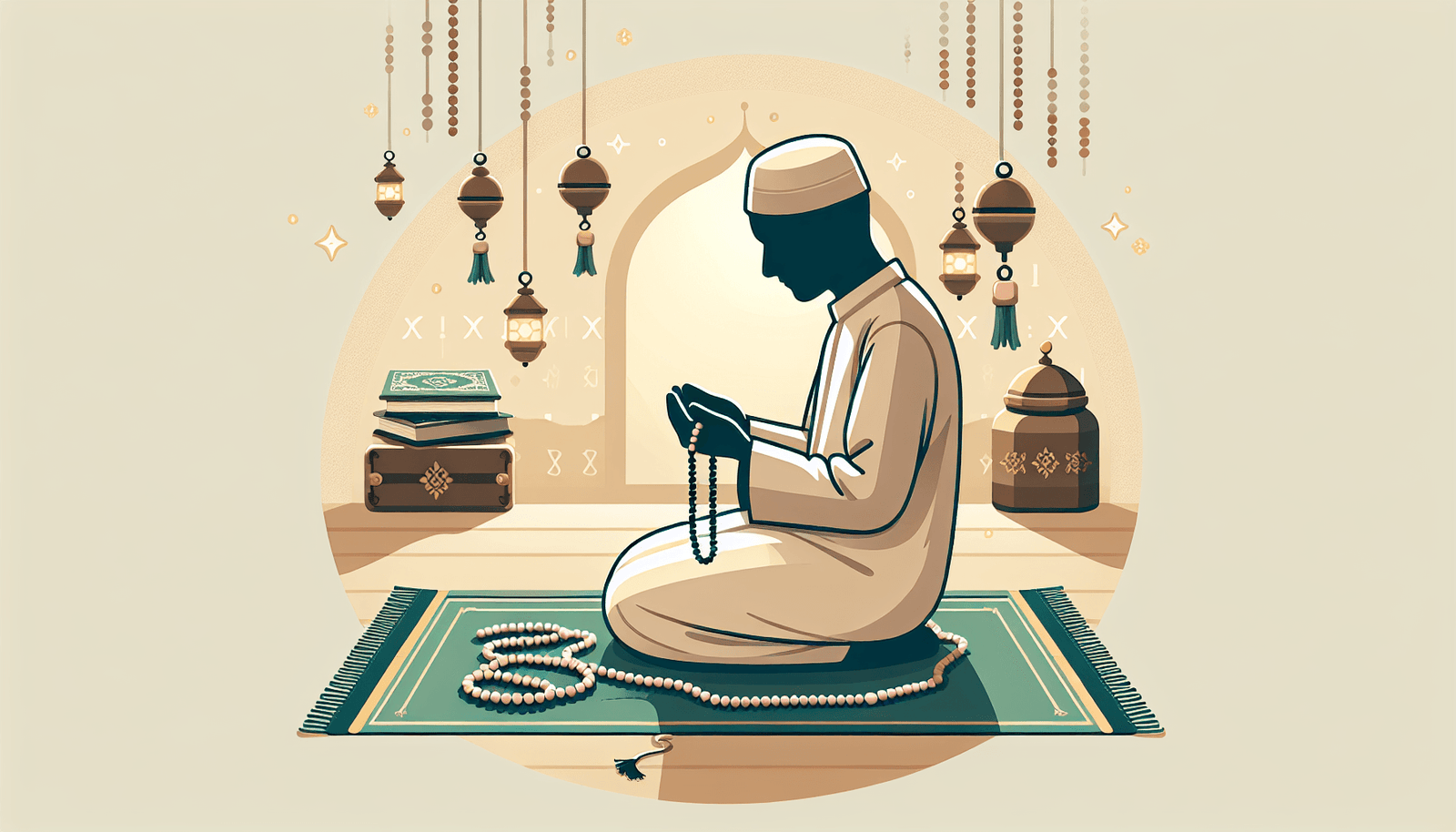
Most people arrive at this subject carrying a specific disappointment. They asked for something, repeatedly and sincerely, and it did not come. Everything else about supplication is easier to write about than that, which is probably why most articles avoid it.
This guide covers dua in Islam properly: what it is, the etiquette around it, the times when it is most likely to be answered, and what the narrations actually say about the duas that appear to go unanswered. Each section links to a fuller guide.
Table of contents
- What dua in Islam actually is
- The etiquette of dua in Islam
- The best times to make dua in Islam
- When a dua seems unanswered
- Memorised wording or your own
- Adhkar and the daily rhythm
- Frequently asked questions
What dua in Islam actually is
The Prophet صلى الله عليه وسلم said al-du’a huwa al-‘ibadah, dua is worship, in a narration recorded by Abu Dawud and Tirmidhi. Not part of worship. Worship itself.
That distinction changes what asking is for. If dua were only a request mechanism, an unanswered one would be a failed transaction. If it is worship, then the asking has already done its work, and the answer is a separate matter entirely.
The Quran puts the invitation in unusually direct terms: call upon Me and I will respond to you (Surah Ghafir 40:60), and when My servants ask you about Me, I am near (Surah Al-Baqarah 2:186, at Quran.com). Nothing in either verse requires an intermediary, a language, or a posture. Dua in Islam is available to anyone, at any moment, in any state.
The etiquette of dua in Islam
None of these are conditions of validity for dua in Islam. They are the manners the Prophet صلى الله عليه وسلم kept, and a dua made without them is still a dua.
- Begin with praise, then salawat on the Prophet صلى الله عليه وسلم. A narration describes a man supplicating without either, and the Prophet صلى الله عليه وسلم remarking that he had been hasty.
- Raise your hands, palms upward. Widely reported, though not required.
- Face the qiblah where you conveniently can.
- Ask with certainty. The narrations discourage the conditional form, asking if You wish, on the basis that no one is compelling Allah and there is no reason to ask small.
- Be persistent. Repeating a request is not nagging. The Prophet صلى الله عليه وسلم would often repeat a supplication three times.
- Do not rush the answer. A narration in Bukhari and Muslim warns against the servant who says: I made dua and it was not answered, then gives up.
- Watch what you consume. Several narrations link unlawful food and income to supplication being obstructed, which connects dua in Islam directly to the halal lifestyle rather than leaving them as separate subjects.
The best times to make dua in Islam
Certain moments are described in the narrations as more likely to be answered. None of them are secret and all of them are free.
- The last third of the night, when the descent described in Bukhari and Muslim takes place. The hardest one, and the one people who keep it never abandon.
- In sujud. The closest a servant is to his Lord is in prostration, as recorded by Muslim. Most people spend that moment reciting rather than asking.
- Between the adhan and the iqamah, a window most of us stand through checking a phone.
- An hour on Friday, whose exact timing the narrations leave unspecified and scholars have located differently.
- While fasting, and at the moment of breaking the fast.
- While travelling, and during rainfall.
Several of these are tied to prayer times rather than to the clock, so they shift through the year. Prayer Times gives you today’s for your location, and the supplications attached to the prayer itself are collected in duas around salah.
When a dua seems unanswered
This is the part people actually came for, and the place where most writing on dua in Islam goes quiet.
A narration in the Musnad of Ahmad, from Abu Sa’id al-Khudri, describes three outcomes for any supplication a Muslim makes that contains no sin and no severing of family ties. Either the request is hastened, or it is stored for the Hereafter, or an evil equivalent to it is turned away.
Read carefully, that narration says something quite specific: there is no fourth category. Nothing is discarded. The answer arriving as something other than the thing you asked for is still the answer, and this is the whole basis on which dua in Islam continues to be made after a disappointment.
That is not a comfort that makes disappointment stop hurting, and it is not offered as one. A person who prayed for a marriage that did not happen, or for a parent who died anyway, is not consoled by a category. What the narration does is remove the conclusion that the asking was wasted, which is the conclusion that stops people praying altogether.
Two practical notes. Scholars observe that delay is itself sometimes the point, because the asking is worship and prolonging it prolongs the worship. And the same narrations that promise a response attach conditions to it: lawful earnings, and not cutting off relatives.
For the seasons when this is the live question, see duas for hardship and relief.
Memorised wording or your own
Both, and the order matters less than people think. Dua in Islam accommodates the memorised and the improvised equally.
The transmitted supplications are precise in a way improvised ones rarely are. They ask for the right things, in proportion, without the narrowness of a request framed entirely around this month’s problem. Learning a handful changes what you think to ask for.
But dua in Islam has never required Arabic or a memorised text. Asking in the language you think in, for the thing you actually want, in the middle of an ordinary afternoon, is dua in the full sense. Someone who only ever recites transmitted wording and never speaks plainly has left out the part that is theirs.
Collections worth starting with: protection from harm, healing and well-being, family and loved ones, gratitude, and safe travel.
Adhkar and the daily rhythm
Adhkar are the shorter, repeated remembrances that sit alongside dua in Islam rather than replacing it. Dua asks; dhikr remembers.
The morning and evening adhkar are the backbone. They take a few minutes, they are tied to times rather than moods, and they work precisely because they do not depend on feeling like it. Our guide to morning and evening adhkar has the wording and the timing.
Frequently asked questions
Can I make dua in English?
Yes. Outside the prayer itself there is no requirement of Arabic, and the majority of scholars permit supplication in any language. Sincerity is the condition, not fluency.
Is it wrong to ask for worldly things?
No. The transmitted supplications ask for provision, health, protection, spouses and children. The Quranic supplication for good in this world and good in the next asks for both, in that order.
How long should I keep asking for the same thing?
There is no limit. The narrations criticise giving up, not persistence. Some of the Companions are described as asking for a single thing for years.
Does dua change what is decreed?
The narrations state that nothing repels the decree except dua, and scholars have explained this in different ways, most commonly that the supplication is itself part of what was decreed. It is a genuine theological discussion rather than a settled one-liner.
Can I ask someone else to make dua for me?
Yes, and asking a Muslim to pray for you is well established. Note that a dua made for someone in their absence is described as being answered for both.
Every guide on dua in Islam
Daily practice: Morning and evening adhkar · Duas around salah · Gratitude
Protection and healing: Protection from harm · Healing and well-being · Family and loved ones
Hardship and specific needs: Hardship and relief · Provision (rizq) · Marriage difficulty · Marriage · A newborn · Safe travel
Several of the best times for dua in Islam are tied to the prayer: Prayer Times for today’s, the Qibla Finder for direction, and Daily Quran for recitation.
Still have questions?
Sofia can answer follow-up questions on this topic, point you to a mosque near you, or help with anything else on Masjid4All.
Ask Sofia about this