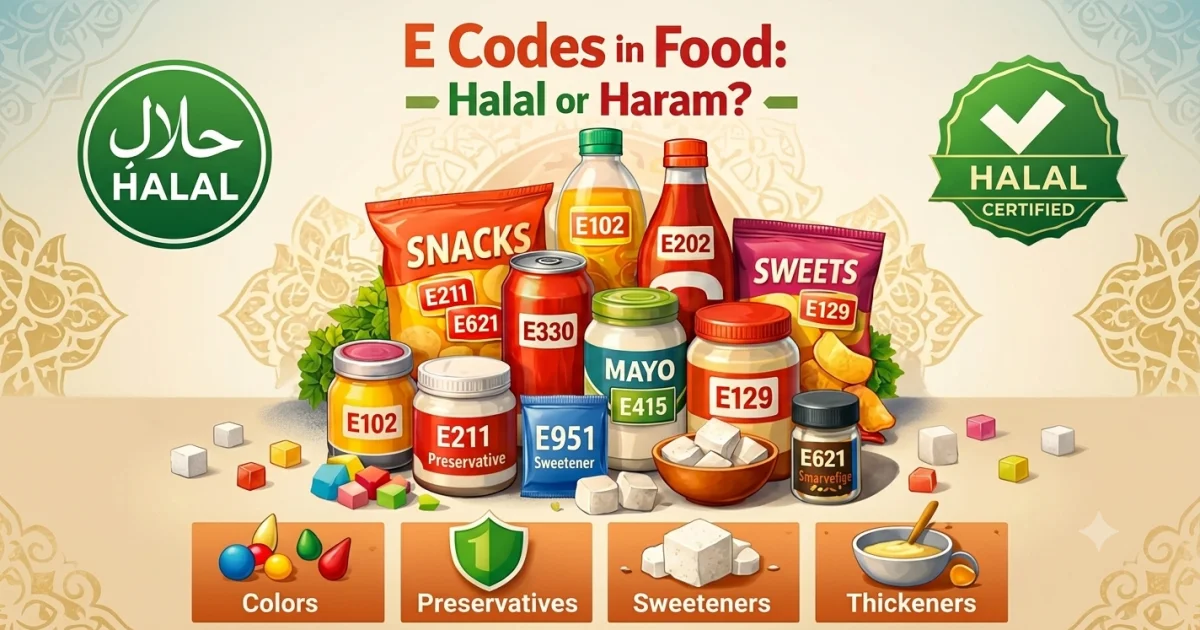
Understanding E Codes in Food Their Halal Status and Usage
E Codes are food additive code used to identify substances added to food during processing TheseE Codes are commonly seen on food labels and packaging The purpose of E Code is to standardize food ingredients across different countries E Code may represent colors preservatives flavor enhancers sweeteners or thickeners
Many people search what are e code or what is an e code because these additives are present in most processed food products Food manufacturers use e code in food to improve shelf life taste texture and appearance Understanding food e code meaning helps consumers make informed choices especially Muslims who follow halal dietary laws
E Codes in Food and Their Halal Status
E Codes food additives can be halal or haram depending on their source and manufacturing process Some e numbers food additives are plant based synthetic or mineral based while others may come from animal sources
Muslims often ask are e code halal or e code halal or haram The halal status of e codes depends on
- Source of food e code whether plant animal or synthetic
- Presence of alcohol or haram substances in processing
- Halal certification for additives by recognized authorities
This is why checking e numbers halal status is important before consuming processed food
Islamic View on E Codes and Halal Ruling
The islamic view on e codes is based on general principles ofhalal and haram food in Islam According to Islamic dietary laws food anything that is pure safe and free from haram sources is permissible
Islamic scholars explain that
- Plant based food additives are generally halal
- Synthetic food additives halal status depends on chemicals used
- Animal derived e code must come from halal slaughtered sources
The halal ruling of food additives also considers whether the substance changes its original form completely This islamic perspective on e code helps Muslims decide can muslims eat e codes or not
How to Identify Halal E Codes in Processed Food
Many people want to know how to check e code halal when shopping Identifying halal e codes requires awareness and label reading
- Check food labelling e code carefully
- Look for halal certification on packaging
- Avoid doubtful e code if the source is unclear
- Use a complete halal e code list for muslims
Understanding the difference between natural and chemical additives also helps in processed food halal check
Common Questions About E Codes
People frequently search what are e code in food and are e code halal or haram in islam The answer is not all e codes are haram and not all are halal Each e code must be evaluated individually
Food e numbers list and e numbers list available online can help identify halal e code Using an e code halal certification guide is the safest option for Muslim consumers
Are All E Codes Haram for Muslims
Many people believe all e code halal or haram are the same but this is not correct E Code include a wide range of food additives Some are completely halal while others need careful checking
- Not every e code is haram
- Many e numbers food additives are plant based
- Some chemical food additives are halal
- Halal status depends on source and processing
Understanding e code halal or haram helps Muslims avoid unnecessary confusion
Difference Between Natural and Synthetic E Codes
Knowing the difference between natural and chemical additives is important when checking food e code meaning Natural e code usually come from plants minerals or fruits Synthetic e code are made in labs
- Natural food additives are mostly halal
- Synthetic food additives halal status depends on ingredients
- Plant based food additives are generally safe
- Animal based additives require halal verification
This distinction supports islamic dietary laws food and halal food ingredients list
Role of Halal Certification in E Codes
Halal certification plays a key role in confirming the halal ruling of food additives Trusted halal authorities examine e code ingredients and production methods
- Halal certification for additives increases trust
- Certified halal e code list helps Muslims
- Food processing halal standards are applied
- Certified products reduce doubt in e code in food
Using halal e codes list makes food choices easier for Muslim families
Can Muslims Consume Foods With E Code Daily
Muslims often ask can muslims consume food e code on a daily basis The answer depends on awareness and careful selection Processed food additives are common but informed choices matter
- Read food labelling e code regularly
- Prefer halal certified processed foods
- Avoid doubtful e number ingredients
- Follow islamic view on e codes for safety
With proper knowledge Muslims can confidently eat foods containing halal e code
Still have questions?
Sofia can answer follow-up questions on this topic, point you to a mosque near you, or help with anything else on Masjid4All.
Ask Sofia about this