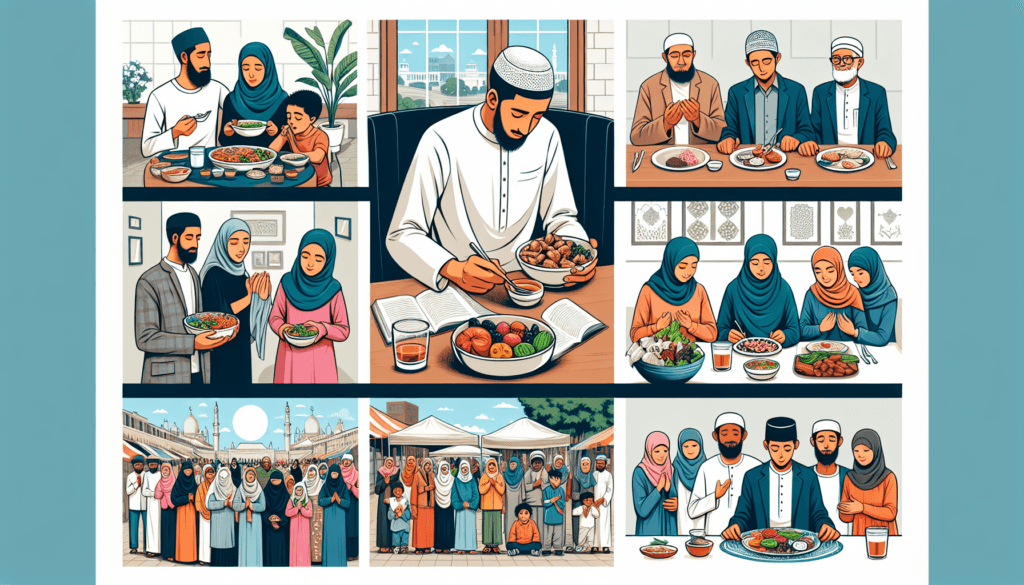
Halal Lifestyle: What It Means in Everyday Practice
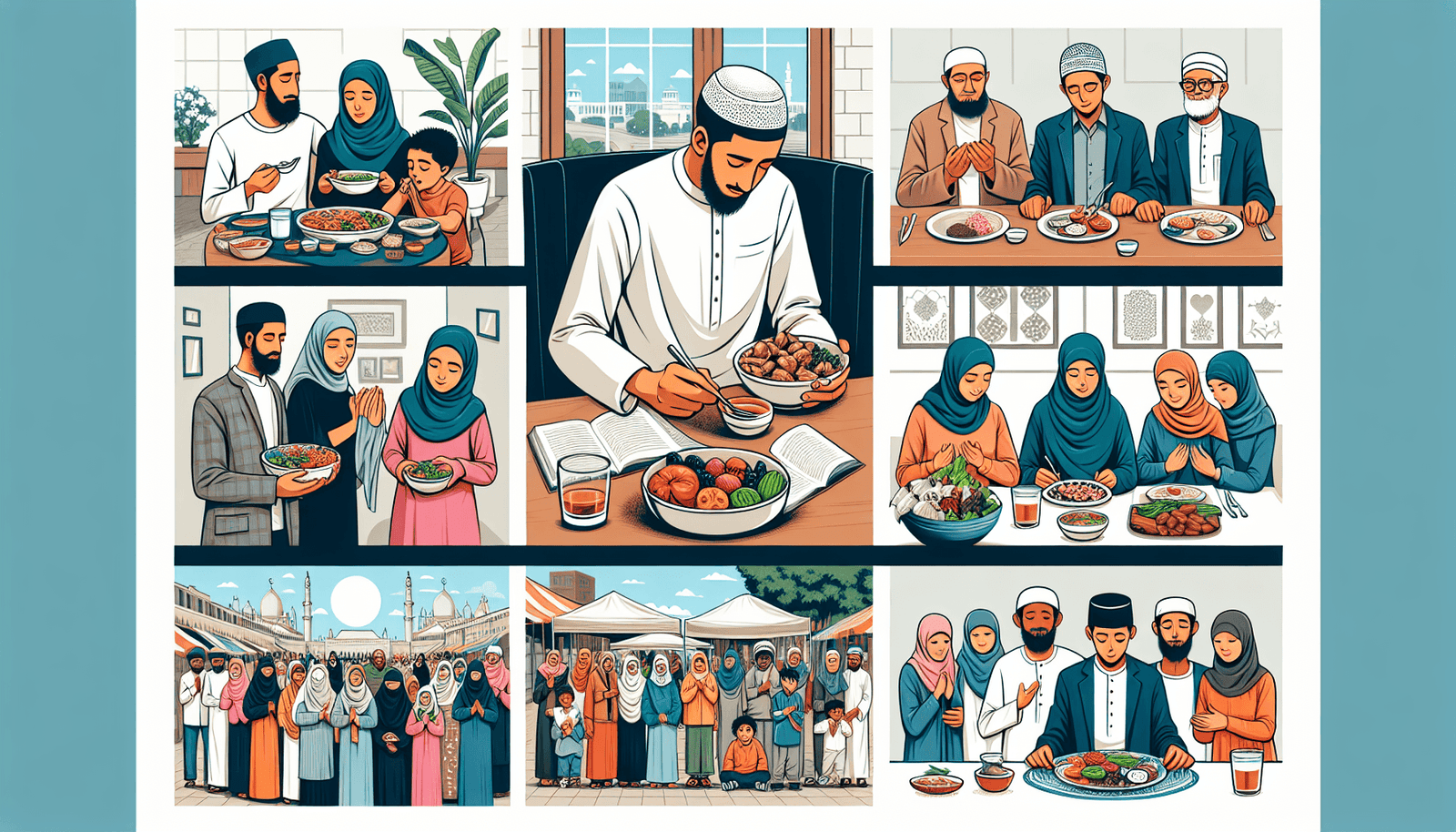
Most people meet this question in a supermarket aisle, holding a packet and reading an ingredients list on their phone. E471. Natural flavouring. Rennet. The packet does not say, the shop assistant does not know, and there are three other things on the list to get through before the shop closes.
A halal lifestyle is often introduced as a set of prohibitions, which makes it sound like a shrinking list of things you may no longer do. In practice it works the other way round. It is a way of deciding, and once the principle is clear most of the individual questions answer themselves.
Table of contents
- What a halal lifestyle actually means
- Food, certification and eating out
- Money and work
- What you buy, wear and watch
- A halal lifestyle in the body and the home
- Travelling and living as a minority
- What a halal lifestyle is not
- Frequently asked questions
What a halal lifestyle actually means
Halal means permitted. Haram means forbidden. Between them sits a third category, mushbooh, the doubtful, and it is where almost all the difficulty lives.
The anchor is a narration of Nu’man ibn Bashir recorded in both Bukhari and Muslim: the lawful is clear and the unlawful is clear, and between them are matters that are unclear, which many people do not know. Whoever avoids the doubtful has protected his religion and his honour. That is not a rule about food. It is a method, and it is what a halal lifestyle rests on.
The second half is the one people skip. The Quran does not say eat what is lawful and stop there; it says eat of what is lawful and tayyib, good and wholesome (Surah Al-Baqarah 2:168, at Quran.com). Food can be technically halal and still be filthy, cruel to the animal, or ruinous to your health. A halal lifestyle that satisfies the certificate and ignores the tayyib has answered half the question.
Food, certification and eating out
The food rules at the centre of a halal lifestyle are short and specific: carrion, blood, pork, and what has been dedicated to other than Allah, set out in Surah Al-Maidah 5:3, along with intoxicants elsewhere. Everything not prohibited is permitted, which is the opposite of how the subject usually feels.
Difficulty comes from processing. Gelatine, emulsifiers, enzymes in cheese, alcohol as a carrier in flavourings. Our guides on halal and haram foods, halal standards and tayyib and E codes in food deal with the detail.
Certification is not one thing
A halal logo is a claim by a specific body, and bodies differ in strictness and in what they audit. In Malaysia, JAKIM certification is the recognised standard and is unusually rigorous, covering the whole supply chain rather than the final recipe. Singapore has MUIS. Elsewhere, certification is often issued by private organisations of varying reputation.
Knowing which body certified something tells you considerably more than the presence of a logo. A halal lifestyle in a country with no dominant authority means learning which certifiers you trust, rather than treating every crescent-shaped sticker as equivalent.
Eating out
The practical questions are about the kitchen, not the menu. Shared fryers, alcohol in the sauce, whether the meat supplier is certified or the owner simply says it is. Asking directly is normal and most owners expect it.
Our Halal Business Directory lists verified halal restaurants, grocers and Muslim-friendly businesses worldwide, with certification status where we hold it. It is the fastest way to answer the question in an unfamiliar city.
Money and work
Income receives less attention than food and matters at least as much. A halal lifestyle built on scrupulous eating and an income from something impermissible has the emphasis backwards.
The main areas are riba, which covers conventional interest on both sides of the transaction, and the nature of the work itself. Selling alcohol, working in a conventional lending role, or writing the contracts for one all raise questions that a payslip does not settle.
Mortgages and student loans are where this gets genuinely hard, particularly for Muslims in the West, and scholars have reached different conclusions about necessity and available alternatives. Our guide to halal earnings covers the principles; a real decision needs a scholar who knows your circumstances.
What you buy, wear and watch
Beyond food and income, a halal lifestyle extends to what you spend on and what you consume with your attention.
On purchases, the Islamic tradition has a great deal to say about how goods are made and who is harmed in the making, which lands close to what is now called ethical consumerism. Exploited labour and cruelty do not become acceptable because the end product carries a certificate. See ethical consumerism in Islam.
On entertainment, the questions are usually about content rather than medium, and scholars differ on music in particular. Rather than searching for a ruling that permits what you already do, the more useful test is what a thing leaves behind in you. Our guide on halal entertainment takes that up, and navigating modern life as a Muslim covers the wider terrain.
A halal lifestyle in the body and the home
Cleanliness is treated as part of faith rather than as preparation for it, and the fiqh of taharah is unusually detailed for that reason. Our guide to personal hygiene in Islam covers it.
Physical health belongs here too. The body is a trust, and the Prophet صلى الله عليه وسلم described the strong believer as better and more beloved than the weak one, in a narration recorded by Muslim. Neglecting your health is not piety. See health and fitness in Islam.
The home is where a halal lifestyle either holds or quietly dissolves, because it is where nobody is watching. Two practical guides: building a barakah-filled home and a halal daily routine that puts worship and work in the same day without either crowding the other out.
Travelling and living as a minority
Everything above assumes a halal lifestyle supported by a certain amount of infrastructure. Remove it and the same principles need more effort: a city with no certified restaurants, a work trip where the only options are a hotel buffet, a country where nobody knows what you are asking.
Seafood and vegetarian options carry you further than people expect, and self-catering solves more than it costs. Our halal travel guide has the practical detail.
Before you fly, it is worth searching the Halal Business Directory for your destination and saving two or three options, and checking the Masjid Directory for the nearest mosque. Ten minutes at home saves a great deal of hunger later.
What a halal lifestyle is not
Two failure modes attach themselves to the halal lifestyle, and both are common enough to name.
It is not endless anxiety. Some people arrive at a state where every meal is an interrogation and every product a possible transgression. The scholars have a word for this, waswasa, and they treat it as a spiritual problem rather than as caution taken seriously. The religion is built on ease where ease is available. If your eating has become a source of dread rather than gratitude, that is worth addressing directly.
It is not a way of ranking other Muslims. Certification standards vary, scholarly positions vary, and circumstances vary enormously. Somebody eating at a restaurant you would avoid may have a considered position, or may not have your options. A halal lifestyle is an account you give of yourself, not a scoresheet for other people.
Frequently asked questions
Is food from People of the Book automatically halal?
The Quran permits the food of the People of the Book, and scholars differ considerably on how that applies to modern industrial slaughter, which often bears little resemblance to what the verse assumed. Positions range from broadly permissive to requiring certification. Follow the position of a scholar you trust rather than the one that is most convenient.
What about alcohol used in cooking or in flavourings?
A live question with real differences. Many scholars distinguish between intoxicating drink and trace alcohol used as a solvent that neither intoxicates nor remains in quantity. Others avoid both. Vanilla extract and some vinegars are the usual examples.
Do I have to check every ingredient?
No. The obligation is reasonable care, not certainty. Where something is doubtful and an alternative exists, avoiding it is better; where you have made a reasonable effort, you are not held responsible for what you could not have known.
How do I find halal food in a city I do not know?
Search the Halal Business Directory by city before you travel, and ask at the nearest mosque once you arrive. Local congregations know which places are reliable long before any listing does.
Every guide on the halal lifestyle
Food: Halal and haram foods · Standards and tayyib · E codes
Money: Halal earnings · Managing wealth · Ethical consumerism
Daily life: Halal daily routine · A barakah-filled home · Personal hygiene · Health and fitness
Modern life: Halal entertainment · Navigating modern life · Halal travel
To put any of this into practice today: the Halal Business Directory for verified restaurants and shops, the Masjid Directory for your nearest mosque, and Prayer Times wherever you are.
Still have questions?
Sofia can answer follow-up questions on this topic, point you to a mosque near you, or help with anything else on Masjid4All.
Ask Sofia about this